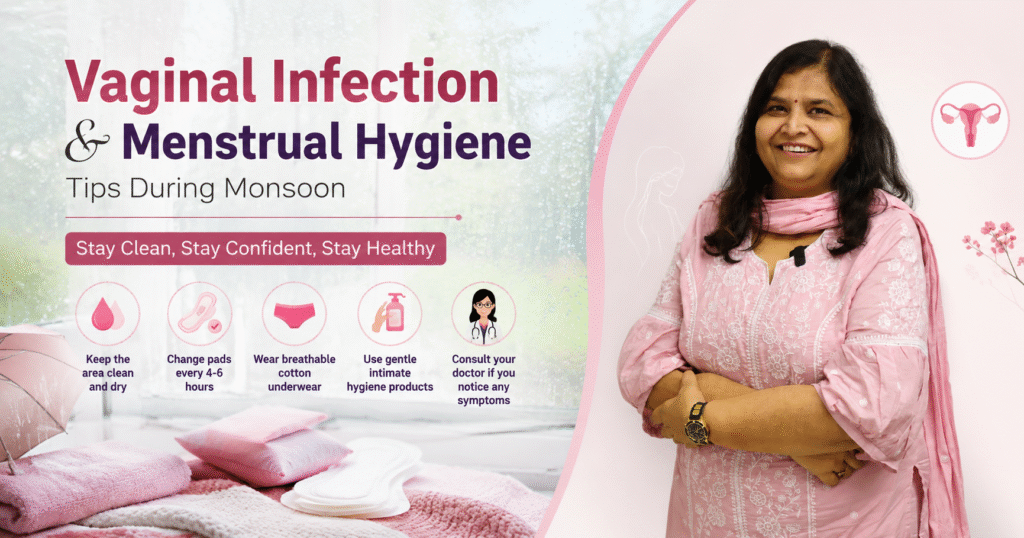
Monsoon brings relief from the heat, but for women’s intimate health, it’s actually a high-risk season. The combination of humidity, moisture, and reduced air circulation creates the perfect breeding ground for bacteria and fungi making vaginal infections during monsoon and menstrual hygiene issues during monsoon season two of the most common concerns Dr. Neelu Agrawal sees at her clinic every rainy season.
In this blog, we cover both topics in detail practical prevention tips, warning signs you shouldn’t ignore, and when it’s time to consult a gynaecologist.
| S.NO. | Table of Contents |
| 1 | Why Monsoon Increases the Risk of Vaginal Infections |
| 2 | Tips to Prevent Vaginal Infection During Monsoon |
| 3 | Menstrual Hygiene Issues During Monsoon Season |
| 4 | Tips for Better Menstrual Hygiene in the Rainy Season |
| 5 | Warning Signs You Should Not Ignore |
| 6 | When to See a Gynaecologist |
| 7 | FAQs |
Why Monsoon Increases the Risk of Vaginal Infections
High Humidity and Moisture
Humidity levels rise sharply during monsoon. This traps moisture around the vaginal area, especially if you wear tight or synthetic clothing, disturbing the natural pH balance and encouraging bacterial and fungal growth. If you’d like to understand this in more depth, we’ve covered it separately in our post on why vaginal infections increase in summer — many of the same triggers apply during monsoon too.
Reduced Ventilation from Clothing
Damp innerwear that doesn’t dry properly in monsoon weather is one of the biggest, most overlooked causes of recurring infections.
Contaminated Water Exposure
Waterlogging and contaminated water sources during heavy rains increase the risk of urinary tract and vaginal infections when hygiene routines slip.
Tips to Prevent Vaginal Infection During Monsoon
1. Choose Breathable Cotton Innerwear
Cotton absorbs moisture and allows air circulation, unlike synthetic fabrics that trap sweat and dampness against the skin.
2. Keep the Area Clean and Completely Dry
Wash the intimate area with plain water (avoid harsh soaps or scented washes) and pat dry thoroughly before dressing — dampness is the number one culprit for fungal infections.
3. Avoid Tight-Fitting Clothes
Skip tight jeans or leggings during monsoon days; looser clothing reduces friction and traps less moisture.
4. Change Wet Clothes Immediately
If you get caught in the rain, change out of wet clothes as soon as possible rather than staying in damp fabric for hours.
5. Maintain a Balanced Diet and Hydration
A diet rich in probiotics (like curd) and adequate water intake helps maintain healthy vaginal flora from the inside out.
6. Avoid Public Washrooms When Possible
If you must use one, avoid direct contact with unclean surfaces and carry sanitizing wipes as a precaution.
7. Don’t Self-Medicate
Over-the-counter creams may mask symptoms temporarily without treating the underlying cause. If symptoms persist beyond a few days, consult a gynaecologist rather than continuing home remedies.
Menstrual Hygiene Issues During Monsoon Season
Periods during monsoon come with their own set of challenges. Higher humidity means sanitary products don’t stay as dry or effective for as long, and the risk of rashes, infections, and odor increases if hygiene practices aren’t adjusted for the season.
Common Monsoon-Related Menstrual Hygiene Problems
● Increased sweating in the genital area leading to irritation
● Sanitary pads feeling damp or less absorbent faster than usual
● Higher chances of urinary tract infections (UTIs) due to humidity
● Fungal rashes around the groin from prolonged dampness
● Difficulty maintaining hygiene while travelling in the rain
Tips for Better Menstrual Hygiene in the Rainy Season
1. Change Sanitary Products More Frequently
During monsoon, change your pad, tampon, or menstrual cup every 4 hours instead of the usual 6–8, since humidity reduces absorbency and increases bacterial growth.
2. Carry Extra Hygiene Supplies While Travelling
Keep spare pads, wet wipes, and a small hand sanitizer in your bag — monsoon commutes are unpredictable and access to clean washrooms isn’t guaranteed.
3. Wash and Dry the Area Properly Between Changes
Always clean the area gently and ensure it is fully dry before putting on a fresh sanitary product.
4. Avoid Scented Sanitary Products
Fragranced pads or washes can further disturb pH balance, which is already more vulnerable during your period and in humid conditions.
5. Watch Out for Irregular Periods Triggered by Season Changes
Stress, weather changes, and lifestyle shifts during monsoon can sometimes cause cycle irregularities. If you notice a pattern, our detailed guide on irregular periods treatment explains the causes and treatment options available in Noida Extension.
6. Track Unusual Discharge Alongside Your Cycle
Not all discharge during monsoon is period-related. If you’re noticing changes outside your cycle, read our post on abnormal vaginal discharge or bleeding to understand what’s normal and what needs medical attention.
Warning Signs You Should Not Ignore
Consult Dr. Neelu Agrawal promptly if you experience:
● Persistent itching, burning, or foul-smelling discharge
● Unusual discharge color or consistency
● Pain or burning during urination
● Redness, swelling, or rash that doesn’t improve in 2–3 days
● Fever along with pelvic discomfort
● Periods that suddenly become very heavy, painful, or irregular
For a fuller checklist of symptoms that warrant a clinic visit, see our guide on warning signs you shouldn’t ignore before visiting a gynaecologist.
When to See a Gynaecologist
Mild irritation often resolves with better hygiene practices within a couple of days. However, if symptoms persist, recur frequently, or are accompanied by pain and fever, it’s time to see a specialist rather than relying on home remedies. Early diagnosis prevents minor infections from developing into more complicated reproductive health issues.
FAQs
Is it normal to get vaginal infections every monsoon?
Recurring infections every monsoon usually indicate a hygiene routine that needs adjusting for the season, or an underlying imbalance that should be evaluated by a gynaecologist.
Can menstrual hygiene issues affect fertility?
Occasional monsoon-related hygiene issues don’t affect fertility, but untreated, recurring infections can lead to complications over time — another reason not to ignore persistent symptoms.
How often should I change my sanitary pad during monsoon?
Every 4 hours is recommended during monsoon, compared to the standard 6–8 hours, due to increased humidity and moisture.
Are menstrual cups safer than pads during monsoon?
Menstrual cups can be a good option since they don’t trap moisture against the skin the way pads do, but they must be cleaned and sterilized properly between uses.
Why Choose Dr. Neelu Agrawal — Best Gynaecologist in Noida Extension
With years of dedicated experience in women’s health, Dr. Neelu Agrawal is recognized as one of the best gynaecologists in Noida Extension, offering personalized, judgment-free care for everything from vaginal infections and menstrual irregularities to infertility treatment and high-risk pregnancy care. Her clinic combines modern diagnostics with a compassionate approach, making it easy for women to seek help early rather than waiting for symptoms to worsen.
Facing recurring infections or menstrual hygiene concerns this monsoon? Book a consultation with Dr. Neelu Agrawal, the best gynaecologist in Noida Extension, today.