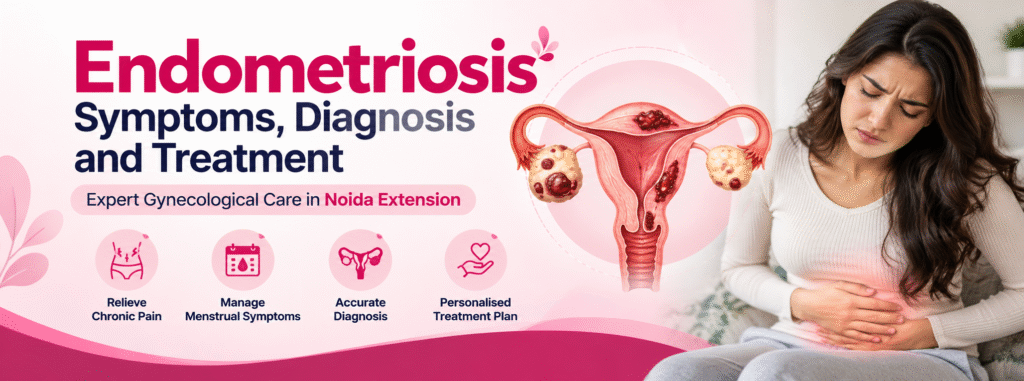
Severe period pain, persistent pelvic discomfort, or difficulty getting pregnant can sometimes indicate an underlying gynecological condition. One such condition is endometriosis, which affects women during their reproductive years and may interfere with everyday activities and reproductive health.
Recognising the symptoms early can help women seek appropriate medical advice. If you are experiencing recurring menstrual pain or pelvic discomfort, consulting a qualified gynecologist in Noida Extension can help you understand the possible cause and explore suitable treatment options.
What Is Endometriosis?
Endometriosis is a condition in which tissue similar to the lining of the uterus grows outside the uterus. This tissue may develop around the ovaries, fallopian tubes, or other areas within the pelvis.
It can cause inflammation, pain, scar tissue, and adhesions. In some women, endometriosis may also affect fertility. However, the severity of symptoms does not always correspond to the extent of the condition.
Understanding the symptoms and obtaining an appropriate medical evaluation are important steps towards managing endometriosis.
Common Symptoms of Endometriosis in Women
Endometriosis symptoms can vary from one woman to another. Some women experience significant discomfort, while others may have few or no noticeable symptoms.
Common symptoms include:
- Severe menstrual cramps: Period pain that interferes with work, studies, sleep, or daily activities.
- Chronic pelvic pain: Persistent or recurring discomfort in the lower abdomen or pelvic region.
- Pain during intercourse: Discomfort or pain during or after sexual activity.
- Painful bowel movements or urination: These symptoms may become more noticeable around menstruation.
- Heavy or irregular bleeding: Some women experience heavy periods or spotting between periods.
- Difficulty conceiving: Endometriosis can affect fertility in some women.
Experiencing these symptoms does not automatically mean you have endometriosis. A medical assessment is needed to determine the underlying cause.
What Causes Endometriosis?
The exact cause of endometriosis is not fully understood. Researchers have identified several possible contributing factors, including genetic influences, immune-system factors, and the movement of menstrual-like tissue into areas outside the uterus.
A family history of endometriosis may increase the likelihood of developing the condition. However, it can also occur in women without a known family history.
Because the causes are complex, endometriosis cannot always be prevented. Recognising persistent symptoms and seeking timely medical advice can help women manage the condition more effectively.
How Is Endometriosis Diagnosed?
If you are searching for endometriosis diagnosis in Noida Extension, a gynecologist may recommend different assessments depending on your symptoms and medical history.
1. Medical History and Physical Examination
The doctor may ask about your menstrual cycle, pain patterns, previous treatments, and fertility concerns. A physical examination may be recommended when appropriate and with your consent.
2. Ultrasound Examination
A pelvic ultrasound may help identify ovarian endometriomas and certain other pelvic abnormalities. However, a normal ultrasound does not rule out all forms of endometriosis.
3. Further Investigations
Depending on the findings, additional imaging, specialist assessment, or laparoscopy may be considered. Laparoscopy is a minimally invasive surgical procedure that can help identify endometriosis and, in selected cases, treat it.
The diagnostic approach should be individualised according to your symptoms and clinical needs.
Endometriosis Treatment in Noida Extension
Treatment depends on the severity of symptoms, the location of the disease, previous treatment, and whether pregnancy is a current goal.
Pain Management and Medication
A doctor may recommend suitable pain-relieving medicines or hormonal treatments to help manage pain and suppress symptoms. The choice depends on your medical history, contraindications, and future pregnancy plans.
Hormonal Treatment
Hormonal medicines may help reduce endometriosis-related pain and menstrual symptoms. They are not suitable for everyone, particularly when a woman is actively trying to conceive.
Minimally Invasive Surgery
In selected cases, laparoscopic surgery may be considered to remove endometriosis lesions, release adhesions, or treat ovarian endometriomas. The potential benefits and risks should be discussed before surgery.
Fertility Guidance
Women experiencing difficulty conceiving may benefit from an individualised fertility assessment. Treatment options depend on age, ovarian reserve, the condition of the reproductive organs, and other fertility factors.
For women seeking endometriosis treatment in Noida Extension, consulting an experienced gynecologist can help identify an appropriate management plan.
When Should You Consult a Gynecologist?
Do not ignore period pain that repeatedly disrupts daily life. Schedule a consultation if you experience severe menstrual cramps, persistent pelvic pain, pain during intercourse, or difficulty conceiving.
Seek urgent medical attention for sudden severe pelvic pain, particularly if it is accompanied by fainting, fever, heavy bleeding, or possible pregnancy.
If you live in Noida Extension, Greater Noida West, or near Gaur City, you can consult Dr. Neelu Agrawal at Healing Women Clinic to discuss persistent menstrual or pelvic symptoms and understand the next steps for evaluation.
Frequently Asked Questions
1. What are the early symptoms of endometriosis?
Early symptoms may include painful periods, pelvic pain, pain during intercourse, or discomfort during bowel movements. Some women have no obvious symptoms.
2. Can endometriosis cause infertility?
Yes. Endometriosis can affect fertility in some women, but many women with the condition can conceive. Individual assessment can help determine suitable options.
3. Can endometriosis be treated without surgery?
Yes. Depending on the diagnosis and symptoms, pain-relieving medicines and hormonal treatments may help manage endometriosis. Surgery is considered in selected cases.
4. Which doctor should I consult for endometriosis in Noida Extension?
A qualified gynecologist can assess your symptoms, recommend appropriate investigations, and discuss treatment options based on your individual needs.
5. Does severe period pain always mean endometriosis?
No. Severe period pain can have several causes, including adenomyosis, fibroids, and other gynecological conditions. Medical evaluation helps identify the likely cause.
Conclusion
Endometriosis can affect menstrual health, daily comfort, and fertility, but appropriate assessment and individualised treatment can help women manage their symptoms. If you are experiencing persistent pelvic pain or unusually painful periods, consult a gynecologist rather than relying on self-diagnosis.
Dr. Neelu Agrawal at Healing Women Clinic in Noida Extension can help you discuss your symptoms and understand the available evaluation and treatment options. Early medical guidance can help you make informed decisions about your reproductive health.